
Dixon Enters New IndyCar Season Intent On Earning Seventh Title
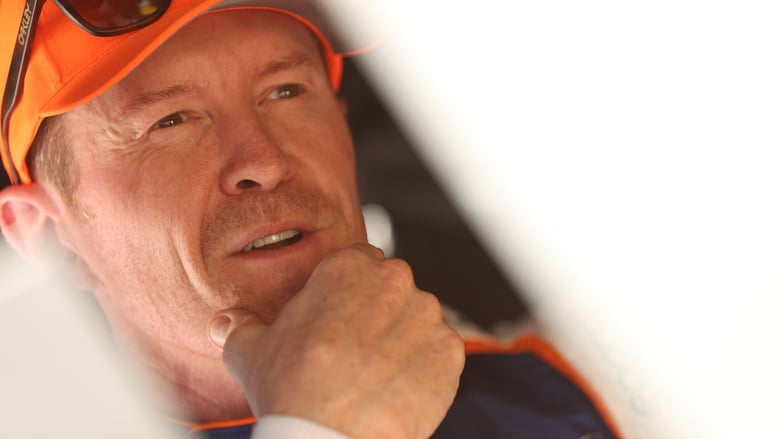
Scott Dixon (Matt Fraver/Penske Entertainment photo)
By Thomas Hughes, SWN Staff Writer
ST. PETERSBURG, Fla. (Feb. 24, 2026) – Chip Ganassi Racing’s Scott Dixon is a superb racing driver.
That’s why it was surprising that he only won one race last year in the NTT IndyCar Series.
Instead, it was his teammate, 28-year-old Spaniard Alex Palou, who stole the spotlight. Palou claimed a staggering eight wins during the 2025 IndyCar slate, accounting for nearly half of the 17-race schedule and asserting himself as the series’ central figure by claiming his fourth title in five years.
Week after week, Palou found speed, consistency and race craft that separated him from the rest of the field. While Dixon remained steady and competitive, the balance of power within one of IndyCar’s most successful teams had clearly shifted.
“I think last year was just a bit of a downer year for us,” Dixon said during IndyCar preseason media availabilities on Jan. 28. “Lots of little mistakes here and there. We had lots of things out of our control, as well. I'm looking forward to it. We had a big deep dive in the off-season, and then there were lots of positives and things that we kind of already knew. Definitely some bits I could have executed a little bit better on.”
Consequently, Dixon enters this season in a position he hasn’t occupied very often – and one he’s really only done so since Palou joined CGR in 2021: the No. 2 driver on the CGR team.
That’s unfamiliar territory for a driver whose resume reads like a catalog of sustained excellence. Dixon has built one of the most decorated careers in modern motorsport history. His numbers speak loudly: 59 victories, six IndyCar championships, more than 300 top-10 finishes and nearly 7,000 laps led.
For two decades, his presence at the front of the grid has been almost automatic. Moreover, he has also captured at least one win every season since 2004.
When going through the list of IndyCar greats, Dixon is likely one of the first names that comes to mind.
However, last season continued a relatively new narrative. For the first time in a long while, Dixon was not the No. 1 at Chip Ganassi Racing. He was still productive, still reliable and still a weekly threat to contend, but Palou’s breakout dominance reframed expectations.
In a sport where performance windows can be short and the next generation is always pushing forward, Dixon suddenly found himself in pursuit rather than in control.
“For us, it was all in the details,” Dixon remarked. “Just execution. Qualifying I think was -- Elkhart, I think I got myself into grief there; Laguna, Barber; Toronto hit the wall; Long Beach hit the wall. There was a lot of things where we gave up a lot of big starting positions on weekends that were looking extremely good.”
That shift doesn’t erase what he’s accomplished, though. It just means, in his words, that that the team needs to “[look] at the details a little bit better.”
Dixon’s career has never been defined by flash. Instead, it’s been built on precision, patience and a near-flawless understanding of race strategy. He has long been considered one of the smartest drivers in the paddock, capable of saving fuel, managing tires and positioning himself to capitalize when races turn chaotic.
While Palou’s eight wins made headlines last season, Dixon remained a steady presence near the front. A single victory might look modest on paper, but maintaining his win streak extended a record that now spans more than two decades.
It also served as a reminder that, even as younger talent rises, Dixon hasn’t faded from the spotlight; instead, he’s simply shifted to not being exactly in the forefront.
The question entering 2026 isn’t whether Dixon still has the ability. It’s whether he can reclaim the spotlight from within his own garage.
Palou’s emergence creates an intriguing dynamic at Chip Ganassi Racing. On one hand, the team benefits from having two elite drivers capable of winning on any given weekend. On the other hand, there’s an inevitable comparison.
Palou’s aggressive pace and consistency have made him the benchmark. For Dixon, that provides both a challenge and motivation.
Few drivers in the sport have responded to adversity as effectively as Dixon over the years. Every time the competition has caught up, he’s found a way to evolve. It’s how he’s recorded wins in every IndyCar season since 2004.
There’s no reason to believe he won’t respond again.
The 2026 season presents an immediate opportunity to set the tone. Dixon’s chance to kick things off with a statement comes in the opener — the Firestone Grand Prix of St. Petersburg.
The race, scheduled for Sunday, March 1 at 12 p.m. ET and broadcast on FOX, marks the beginning of another long championship chase. Street courses have often rewarded experience, and few drivers manage the tight confines and shifting track conditions better than Dixon.
For a driver with his track record, motivation doesn’t come from proving he belongs. That’s long been established. Instead, it comes from the pursuit of more. More wins, more championships and the chance to measure himself against the best in the present, not just the past.
Dixon is running out of time in that regard; the New Zealander will turn 46 this July.
At this stage of his career, every season adds to his legacy. Another championship would tie him even closer to the greatest figures of racing and lift him past some in the process. Another multi-win campaign would reinforce the idea that longevity and excellence can coexist in a sport built on speed and risk while slightly favoring youth.
“Ultimately, you just want to win,” Dixon said. “Not many people remember who came third last year. They only remember the champion.”
And yet, the presence of Palou gives the story a different edge.
“He’s always been an extremely well-rounded driver,” Dixon said of his teammate and title rival. “I think the other thing, too, is [that] he works extremely hard. It’s not like it just comes effortlessly. He’s a really hard worker. … He’s definitely the standard right now and who everybody is chasing.”
Instead of being the unquestioned leader, Dixon now has a clear rival across the garage. That internal competition could push both drivers to new heights.
Palou has set the standard with his recent run. Dixon now has the opportunity to respond, drawing on experience and instinct in a way few others can.
If the last two decades have shown anything, it’s that writing off Scott Dixon is a mistake. Fifty-nine wins and six championships have proven that.
As the green flag drops in St. Petersburg, Dixon won’t just be chasing another season-opening win. He’ll be chasing the next chapter in a career already filled with them – and perhaps reminding everyone that even in a new era led by younger stars, one of IndyCar’s all-time greats still has plenty left to give.
